

Most families planning a veteran’s funeral don’t know that a government headstone is free — even for a private cemetery plot — or that burial in a national cemetery costs the family nothing at all.
These benefits are earned, not means-tested, but they aren’t automatic. Someone has to apply. Here’s what’s available and how to claim it.
What’s Actually Covered
| Benefit | What It Covers | Where It Applies |
|---|---|---|
| National cemetery burial | Gravesite, opening and closing the grave, grave liner, perpetual care, headstone — all at no cost | VA national cemeteries |
| Headstone or marker | A government headstone, marker, or niche cover provided free | National or private cemeteries, worldwide |
| Medallion | Affixes to a privately purchased headstone to denote veteran status | Private cemeteries |
| Burial allowance | Partial reimbursement toward funeral and burial costs | Paid to whoever covered the expenses |
| Plot allowance | Separate payment toward a private cemetery plot | Private cemeteries |
| Burial flag | A United States flag to drape the casket, given to the next of kin | Anywhere |
| Presidential Memorial Certificate | An engraved certificate signed by the president | Anywhere |
The headstone benefit is the one families most often miss. It applies whether the veteran is buried in a national cemetery or a private one — including a local cemetery like Lebanon’s I.O.O.F. Cemetery.
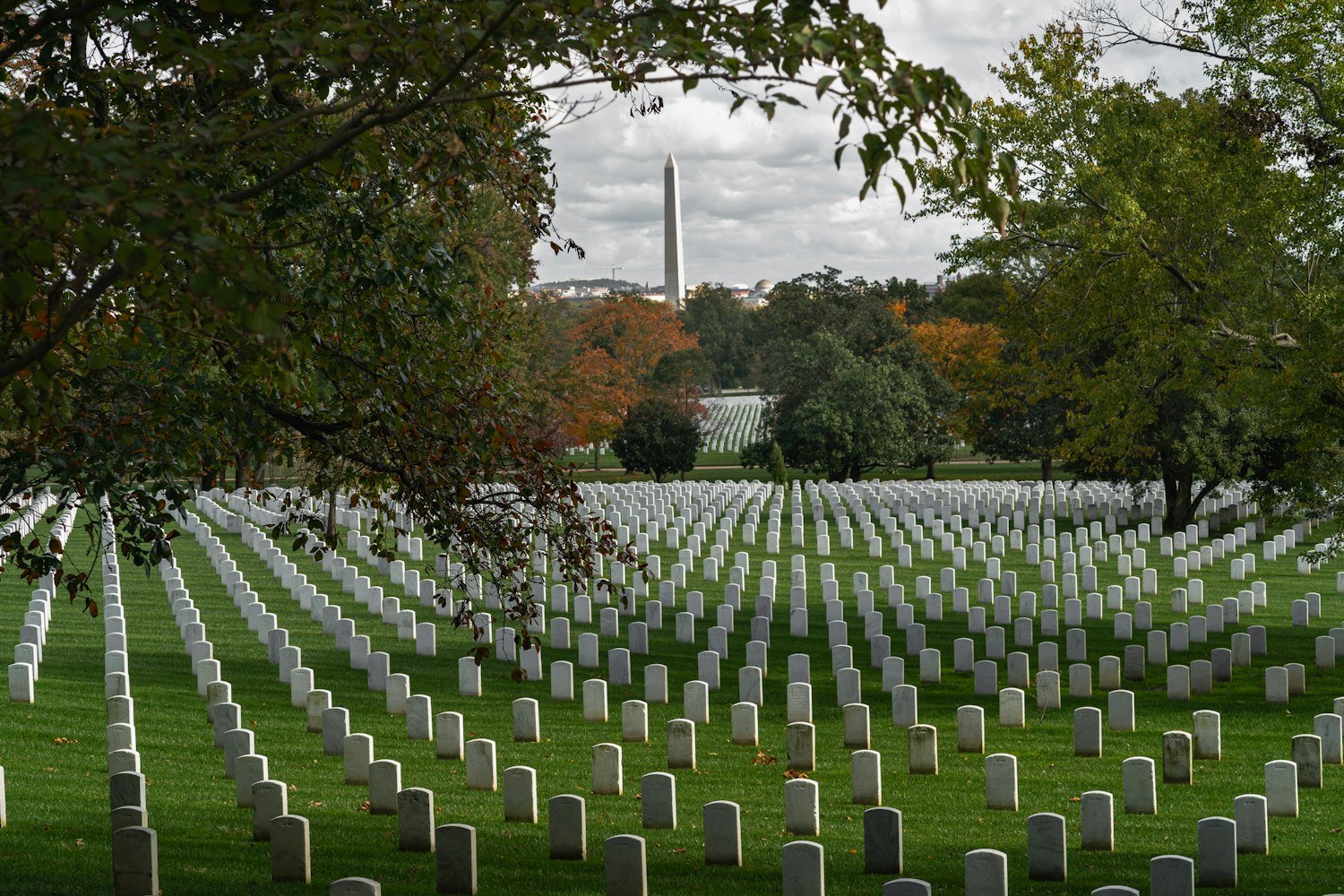
The Burial Flag and Memorial Certificate
Two benefits cost nothing, require little paperwork, and mean a great deal to families — yet get overlooked constantly.
The burial flag is a United States flag provided to drape the veteran’s casket, then presented to the next of kin. It’s the flag folded into a triangle during military honors. Funeral homes typically handle the request, and it’s available regardless of where the veteran is buried.
The Presidential Memorial Certificate is an engraved certificate bearing the president’s signature, honoring the veteran’s service. Families can request multiple copies, which matters when several relatives want one. Both can be requested well after the funeral if they were missed at the time.
Who Qualifies
The baseline requirement is straightforward: the veteran must not have been discharged under dishonorable conditions.
For the burial allowance specifically, families generally qualify without proving financial need if the veteran was receiving VA disability compensation or pension at the time of death, or died while admitted to a VA hospital, nursing home, or approved state facility.
Spouses and dependent children are also eligible for burial in a national cemetery, typically in the same gravesite — something families often don’t realize when weighing options.
About the Dollar Amounts
Burial and plot allowances are adjusted periodically, and service-connected deaths are reimbursed at a substantially higher rate than non-service-connected ones.
Rather than quote figures that go stale, the reliable source is the VA’s official burial allowance page, which lists current rates and their effective dates. As a general shape: service-connected deaths draw the highest allowance, non-service-connected deaths draw a smaller burial allowance plus a separate plot allowance, and a modest headstone allowance exists for privately purchased markers.
How to Apply
- Locate the DD-214. Discharge paperwork is the foundation of every burial benefit claim.
- Tell the funeral home the veteran served. Many funeral directors handle the burial benefits application at no additional charge and coordinate military funeral honors.
- File VA Form 21P-530EZ for the burial allowance — online through VA.gov, by mail to the appropriate Pension Management Center, or through a service officer.
- Request the headstone or marker separately if burial is in a private cemetery.
- Watch the deadline. Burial allowance claims generally must be filed within two years of burial.
The Free Option Most Families Overlook
An accredited service officer will file these claims for a family at no charge. That’s the same free assistance covered in our guide to American Legion service officers and VA claims — and it applies to survivors, not just veterans themselves.

National Cemetery vs. Private Cemetery
This is the decision most families face first, and the tradeoffs are practical rather than sentimental.
| VA National Cemetery | Private Cemetery | |
|---|---|---|
| Cost to family | None — gravesite, opening/closing, liner, and marker all covered | Plot and most costs paid by family, partially offset by allowances |
| Headstone | Provided free | Government marker still provided free, or a medallion for a private stone |
| Location | Wherever the nearest national cemetery is — may involve travel | Local, often near family and easy to visit |
| Spouse eligibility | Generally eligible, often same gravesite | Depends on the cemetery’s own rules |
| Perpetual care | Maintained in perpetuity by the VA | Depends on the cemetery |
Families in the Lebanon area frequently choose a local cemetery specifically so relatives can visit easily — and the headstone benefit follows the veteran there regardless.
The same benefit can mark an ancestor’s unmarked grave, but only once the service is documented. Our guide to tracing a veteran ancestor’s military records covers how to find that proof.
Military Funeral Honors Are Separate
Burial benefits and funeral honors are two different things, requested through different channels. Honors — the flag folding, Taps, and rifle salute — are provided by a funeral honors detail, often including volunteers from local veterans organizations.
Post 51’s Honor Guard performs this service for area families. Our guide to what an American Legion Honor Guard does covers the ceremony in detail and how to request it.

Planning Ahead Instead of Scrambling
Families dealing with these forms are usually doing it in the worst week of their lives. A few steps taken in advance remove nearly all of that friction.
- Find the DD-214 now and store a copy somewhere the family can locate it. A service officer can help request a replacement if it’s lost.
- Apply for national cemetery eligibility in advance. The VA offers pre-need eligibility determination, so the answer is on file before it’s needed.
- Write down the veteran’s wishes — national versus private cemetery, burial versus cremation, whether they want honors.
- Tell someone. Benefits go unclaimed most often because the surviving family simply didn’t know they existed.

Frequently Asked Questions
Is a military headstone really free?
Yes. The VA provides a government headstone or marker at no cost for eligible veterans, whether buried in a national cemetery or a private one.
Does the VA pay for the whole funeral?
No. The burial allowance is a partial reimbursement, not full coverage. Burial in a national cemetery, however, is provided at no cost to the family.
Can a spouse be buried with the veteran?
Generally yes. Spouses and dependent children are typically eligible for burial in a national cemetery, often in the same gravesite.
What form do I need for the burial allowance?
VA Form 21P-530EZ, the Application for Burial Benefits. It can be filed online, by mail, or through an accredited service officer at no charge.
Is there a deadline to apply?
Burial allowance claims generally must be filed within two years of the veteran’s burial.
What if the veteran already has a private headstone?
A VA medallion can be affixed to a privately purchased headstone to denote veteran status, as an alternative to a government marker.
Ask Before You Need To
If you’re a veteran or a family member and haven’t sorted this out, a phone call now saves a great deal later. Post 51 can point you toward accredited assistance — call (541) 451-1351.