
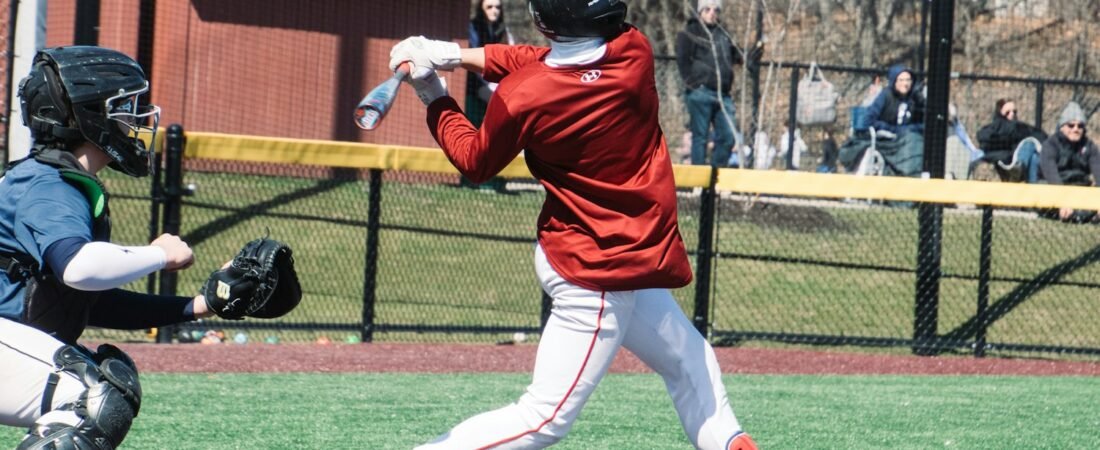
Eighty-two members of the Baseball Hall of Fame played American Legion Baseball. Yogi Berra, Ted Williams, Roy Campanella, Frank Robinson, Greg Maddux, Albert Pujols — all of them came up through posts like this one.
Most parents in Lebanon have never heard that, and it’s a fair sign of how little-known the Legion’s youth programs are despite running for a century. Here’s what they are, who qualifies, and what they’re worth.
The Programs at a Glance
| Program | Who It’s For | What It Involves | Running Since |
|---|---|---|---|
| American Legion Baseball | Teen players (age limits vary by division) | Competitive summer league play up to a World Series | 1925 |
| Boys State / Boys Nation | High school juniors | Week-long mock government; two per state advance to Boys Nation | 1935 |
| Oratorical Contest | High school students | Constitution-focused public speaking competition | 1938 |
| Junior Shooting Sports | Youth marksmen | Air rifle marksmanship with safety and discipline emphasis | Ongoing |
| Scholarships | Varies by award | Direct financial aid, often tied to the programs above | Ongoing |
American Legion Baseball: A Century of It
The program began on June 17, 1925, when former Army Major John L. Griffith — then commissioner of the Big Ten Conference — pitched the idea at the Legion’s South Dakota department convention in Milbank. It was adopted nationally that same year, and the first national tournament followed in 1926.
That timing is worth noting locally: Legion Baseball and Santiam Post 51’s own charter are essentially the same age.
The alumni list reads like a Cooperstown roster. Bob Feller started playing at 12 and reached the majors at 17, before finishing high school. Frank Robinson led an Oakland team to the only back-to-back national championships in program history. Yogi Berra, who played for a St. Louis post, called it the most fun he ever had.

Boys State: Building a Government From Scratch
Boys State is a week-long program where high school juniors don’t study government — they run one. Delegates form political parties, campaign, elect officials at city, county, and state level, draft and debate legislation, and operate the whole apparatus themselves.
Two delegates from each state program advance to Boys Nation in Washington, D.C. It’s the male counterpart to the Auxiliary’s Girls State, which we cover in our guide to the American Legion Auxiliary.
Selection is competitive, and students are typically sponsored by a local post — meaning Post 51 is the pathway for a Lebanon student.

The Oratorical Contest: The Best-Kept Scholarship Secret
Running since 1938, the National High School Oratorical Contest asks students to prepare and deliver speeches on the U.S. Constitution — including an assigned-topic round they can’t fully rehearse for.
The money is the part that surprises people. According to The American Legion’s national scholarship program, finalists can earn scholarships in the range of $20,000 to $25,000, with additional awards at each advancing level.
Competition begins at the post level. A student in a town the size of Lebanon faces a far shorter path to the state round than one competing out of a major metro area — which makes local participation genuinely worth considering.

Junior Shooting Sports
The Legion’s Junior Shooting Sports program centers on air rifle marksmanship, taught with heavy emphasis on safety, range discipline, and steady progression. It’s a precision sport rather than a hunting program.
Post 51 has historically maintained a Junior Rifle program — contact the Post for current status and availability.

What Parents Usually Want to Know
A few practical questions come up constantly, and the answers are less demanding than most families expect.
- Cost: Boys State is typically underwritten by the sponsoring post, so the family’s out-of-pocket expense is minimal or none. Baseball costs vary by team.
- Time commitment: Boys State and the Oratorical Contest are short-duration — a week and a competition season respectively. Baseball is a full summer.
- Competitiveness: Selection for Boys State is competitive, but the applicant pool at a single small-town post is far smaller than statewide numbers suggest.
- Timing: Most programs recruit months ahead — Boys State selection often happens in late winter or early spring for a summer session.
Scholarships: The Numbers
The financial support is not symbolic. Across a recent reporting period, American Legion posts awarded over $6.6 million in scholarships to more than 3,700 students, and Legion-wide college aid has approached $9 million annually to roughly 4,500 students.
- Oratorical Contest awards — among the largest single scholarships, reaching $20,000–$25,000 for finalists.
- Baseball scholarships — typically $500 to $5,000, based on performance and academics.
- Samsung American Legion Scholarship — for Boys State and Girls State participants who are direct descendants of wartime veterans.
- Post-level awards — many posts fund their own local scholarships.
Why These Programs Survived a Century
Youth programs come and go. It’s worth asking why these particular ones have lasted since the 1920s and 30s while countless similar efforts folded.
Part of the answer is structural: they’re run by local posts with permanent buildings, standing volunteer bases, and no dependence on grant cycles. A post that has existed in the same town since 1926 can field a baseball team in a lean year when a newer organization would fold.
The other part is that the programs were designed around participation rather than spectating. Boys State delegates run the government. Oratorical competitors write and deliver their own arguments. Legion Baseball players play a full competitive season, not a few exhibition games. That design has aged well precisely because it never depended on being novel.
Do You Have to Be From a Veteran Family?
Mostly no, with one notable exception. Baseball and the Oratorical Contest are generally open to students regardless of family military background. The Samsung scholarship specifically requires descent from a wartime veteran.
If your family does have a service connection, it’s worth knowing that the same connection may make you eligible for Legion Family membership through the Auxiliary or Sons of The American Legion.

Frequently Asked Questions
How old is American Legion Baseball?
It began in 1925 at the Legion’s South Dakota department convention, with the first national tournament in 1926 — making it one of the oldest continuously operating youth sports programs in the country.
How many Hall of Famers played Legion Baseball?
82 members of the Baseball Hall of Fame came through the program, including Yogi Berra, Ted Williams, Frank Robinson, and Roy Campanella.
What is Boys State?
A week-long program where high school juniors build and operate a mock state government, electing officials and passing legislation. Two delegates per state advance to Boys Nation in Washington, D.C.
How much can the Oratorical Contest scholarship be worth?
Finalists can earn scholarships in the $20,000 to $25,000 range, with additional awards at advancing levels of competition.
Do students need a veteran in the family to participate?
Generally no for Baseball and the Oratorical Contest. The Samsung American Legion Scholarship does require direct descent from a wartime veteran.
How do students in Lebanon get involved?
Contact Post 51 at (541) 451-1351. Local posts sponsor delegates and host the first level of competition for several programs.
Worth a Phone Call
These programs run on local posts sponsoring local students — which means a student in Lebanon has a real path to them, but only if someone asks. Call (541) 451-1351 to find out what Post 51 is running this year.