
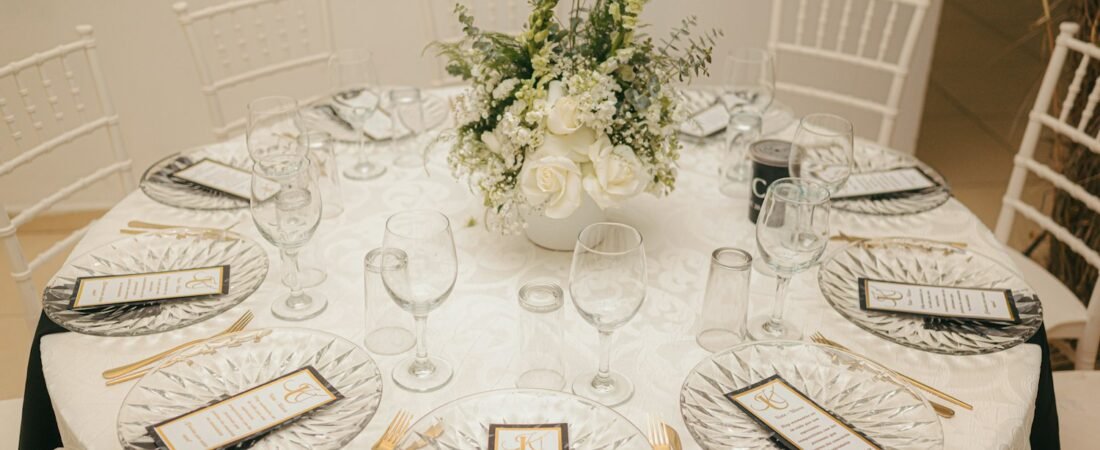
At the front of many American Legion halls sits a small table set for a meal nobody will eat. A single place setting. An inverted glass. An empty chair tipped forward. If you’ve walked past one without knowing what it was, you’ve walked past one of the most deliberate pieces of symbolism in American military tradition.
Every object on that table means something specific. Here’s what each one represents, and why Post 51 keeps one.
What Is the Missing Man Table?
The Missing Man Table — also called the POW/MIA Table or the Fallen Comrade Table — is a memorial honoring service members who were taken prisoner of war or remain missing in action. It appears at military dinners, veteran organization halls, memorial services, and POW/MIA Recognition Day observances.
Unlike a plaque or a monument, it’s designed as an absence you can see. The table is set for someone who isn’t coming, and that’s the entire point.
What Every Item on the Table Means
| Element | What It Symbolizes |
|---|---|
| The round table | Everlasting concern — a circle with no end |
| The white tablecloth | The purity of their intentions in answering their country’s call |
| The single red rose | The lives of the missing, and the loved ones who keep faith while awaiting answers |
| The yellow ribbon (on the vase) | Continued hope for their return and the demand for a full accounting |
| The slice of lemon | Their bitter fate — captured or missing in a foreign land |
| The grains of salt | The countless tears of families still waiting |
| The inverted glass | They cannot join in the toast |
| The black napkin | Sorrow for those still unaccounted for |
| The empty chair | They are not here |
Some settings include a lit candle representing the light of hope, and a Bible or book representing faith and the strength drawn from it.

Set for One, or Set for Six?
You’ll see both versions, and neither is wrong.
- Set for one — the most common arrangement, representing all missing service members collectively.
- Set for five — one place for each branch: Army, Marine Corps, Navy, Air Force, and Coast Guard.
- Set for six — the five branches plus a sixth setting for the families waiting at home.
Which version a post uses generally comes down to space and local tradition rather than any rule.

The Numbers Behind the Table
The table isn’t a historical artifact — it represents an open case file. More than 80,000 Americans remain unaccounted for from World War II, Korea, Vietnam, the Cold War, and later conflicts, according to Defense POW/MIA Accounting Agency figures cited by the National League of POW/MIA Families, the organization founded by the families themselves.
Of those, roughly 38,000 are considered potentially recoverable, and identifications continue at a pace of around 200 per year. That’s why the yellow ribbon symbolizes a demand for accounting rather than simple remembrance — the work is ongoing.

Where the Tradition Came From
The Missing Man Table is younger than most people assume. It isn’t a custom inherited from earlier centuries — it emerged from the Vietnam War era, when the fate of American POWs and MIAs became a national preoccupation.
Credit most often goes to the Red River Valley Fighter Pilots Association — the “River Rats,” a group formed in Thailand in 1967 by aircrews flying missions over North Vietnam. At their reunion banquets in the late 1970s, they formalized the practice of setting an empty place for those who hadn’t come home. A memorial built at Randolph Air Force Base in Texas in 1977 is frequently cited as the original.
Other accounts credit early formal performances to Air Force organizations around 1980. The origin isn’t perfectly documented, which is itself telling — the ritual spread by adoption rather than by directive. By the 1980s every branch of the U.S. military had taken it up, and veteran organizations followed.
How the Ceremony Works
Setting the table is often a ceremony in itself. A narrator reads the meaning of each element aloud while it’s placed — the cloth, then the rose, then the ribbon, and so on — so the audience watches the symbolism assembled piece by piece.
It’s typically performed in silence apart from the narration, and participants remain standing. The effect is closer to the military funeral honors an Honor Guard renders than to a typical program item: deliberate, unhurried, and unmistakably solemn.

POW/MIA Recognition Day
National POW/MIA Recognition Day falls on the third Friday of September each year. Legion posts, military installations, and civic organizations across the country hold observances — many centered on exactly this table.
It’s distinct from Memorial Day, which honors those confirmed to have died in service. POW/MIA Recognition Day is specifically about the unresolved cases: the families who never received an answer.
How to Behave Around the Table
People who encounter a Missing Man Table for the first time often worry about doing something wrong. The etiquette is simple and forgiving.
- Don’t sit at it or set anything on it. The chair stays empty, and the surface stays as arranged — that’s the whole meaning.
- Photographs are generally fine outside of an active ceremony, though it’s worth asking at an event.
- Stand during the setting ceremony if one is being performed, and stay quiet through the narration.
- Explain it to children who ask. The table exists to prompt exactly that question, and a plain answer — “these are soldiers who never came home, and we don’t know what happened to them” — is the right one.
The Table at Post 51
Post 51 maintains a POW/MIA Empty Table display as a standing part of the Post. It sits alongside the Post’s other year-round remembrance work — the Honor Guard, the Memorial Day observance at I.O.O.F. Cemetery, and a history in Lebanon dating to 1926.

Frequently Asked Questions
What does the Missing Man Table represent?
It honors service members who are prisoners of war or missing in action. Each item on the table carries a specific meaning, from the white cloth representing purity of intent to the inverted glass showing they cannot share the toast.

Why is the glass turned upside down?
The inverted glass symbolizes that the missing cannot join in the meal or the toast being shared by those present.
What does the lemon on the plate mean?
The slice of lemon represents the bitter fate of those captured or missing in a foreign land while serving their country.
Why is the table round?
The round shape represents everlasting concern for the missing — a circle with no beginning and no end.
When is POW/MIA Recognition Day?
The third Friday of September each year.
How many Americans are still missing?
More than 80,000 remain unaccounted for across past conflicts, according to the Defense POW/MIA Accounting Agency, with roughly 38,000 considered potentially recoverable.
Look Closer Next Time
The Missing Man Table asks very little of anyone who encounters it — just that you understand what you’re looking at. If you’d like to see Post 51’s, or attend a POW/MIA observance, call (541) 451-1351.