
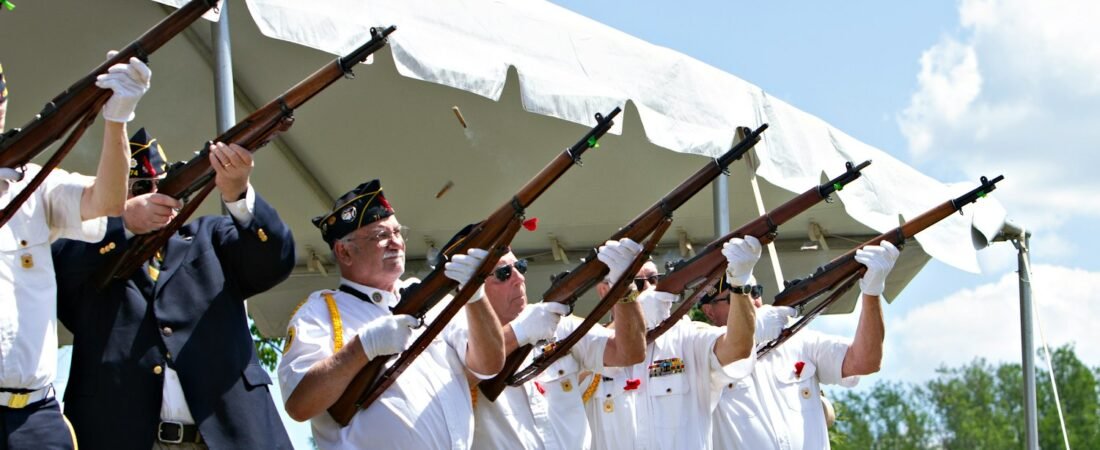
When a veteran’s flag-draped casket is folded into a tight triangle and handed to a grieving spouse, that’s the moment most people picture when they think of a military funeral. What they usually don’t know is that the people performing it — often not active-duty service members at all — are volunteers from groups like the American Legion Honor Guard, and that the family is entitled to this by law, at no cost.
Here’s what an Honor Guard actually does, how it differs from a Color Guard, and how Post 51’s Honor Guard serves veterans’ families in Lebanon, Oregon.
What Is an Honor Guard?
An Honor Guard is a ceremonial detail that renders military honors — most visibly at funerals, but also at parades, dedications, and civic events. American Legion posts across the country, including Post 51, maintain their own Honor Guard made up of veteran volunteers trained in the specific choreography of military honors.
Honor Guard vs. Color Guard: What’s the Difference?
The two terms get used interchangeably, but they’re not the same role.
| Honor Guard | Color Guard | |
|---|---|---|
| Primary role | Renders full military funeral honors | Presents or carries the national and state colors (flags) |
| Rifle volley | Yes — part of full military honors | No — reserved for funerals, Memorial Day, and Veterans Day only |
| Typical setting | Funerals, memorial services | Parades, ceremonies, flag presentations, sporting events |
| Flag folding | Yes, as part of funeral honors | No |
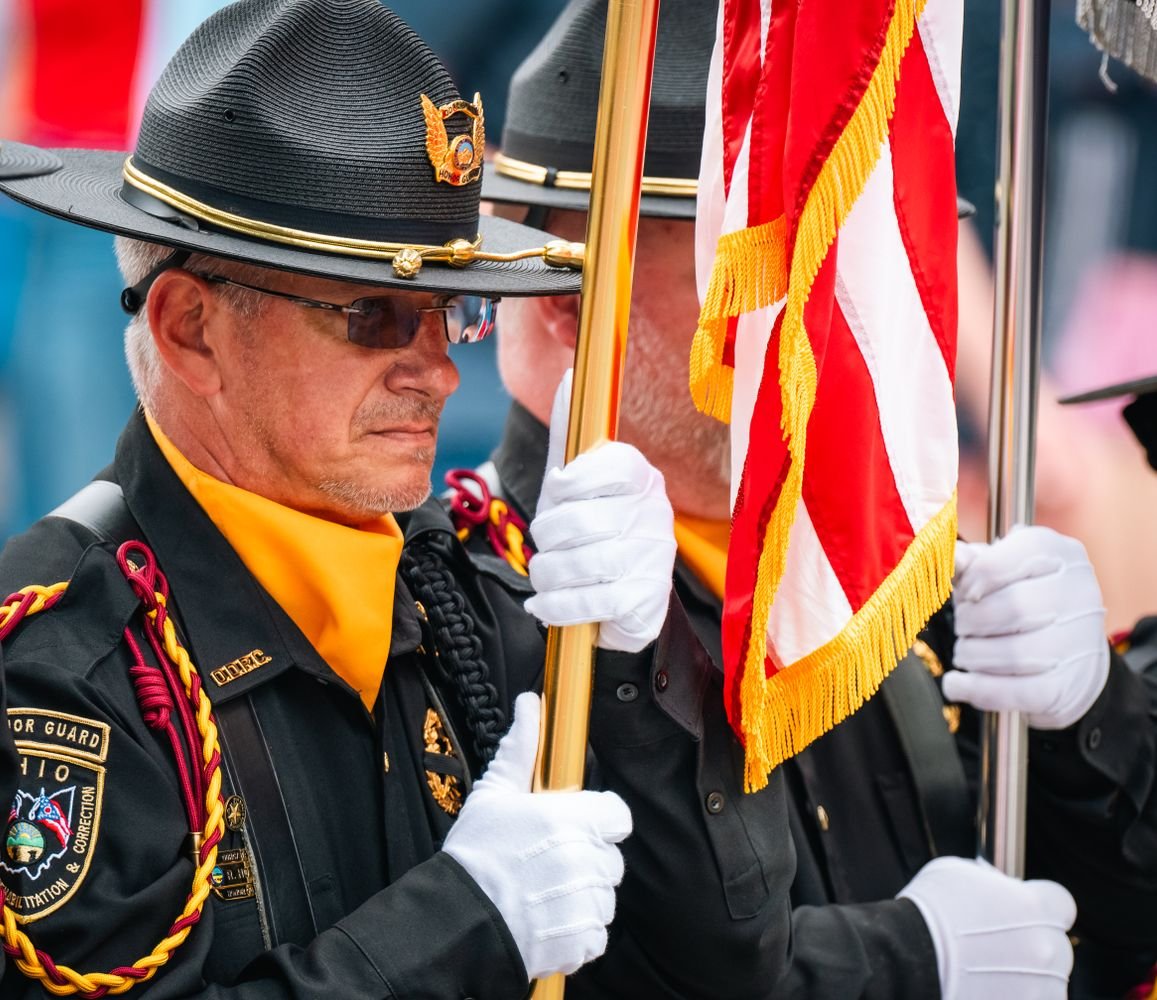
In practice, the same trained members often serve both roles depending on the event — Post 51’s team might render full honors at a funeral one week and carry the colors at a Memorial Day observance the next.
Every Veteran Has a Legal Right to Funeral Honors
This is the part most families don’t realize: military funeral honors aren’t a courtesy or a favor. Under 10 U.S. Code § 1491, the Secretary of Defense is required to provide a funeral honors detail, upon request, for any eligible veteran’s funeral — free of charge. The Department of Defense authorizes veterans organizations like the American Legion to help fulfill this requirement, which is exactly the role Post 51’s Honor Guard plays locally.
What Happens During Military Funeral Honors
Full military funeral honors follow a specific, respectful sequence. Not every element applies to every service, but here’s what’s typically included.
| Element | What It Involves |
|---|---|
| Body watch | Honor Guard members stand vigil near the casket before the service |
| Invocation | An opening statement or prayer to begin the ceremony |
| Three-volley rifle salute | Three rifles fire three rounds each — a 21-shot tradition, not “21 guns” fired individually |
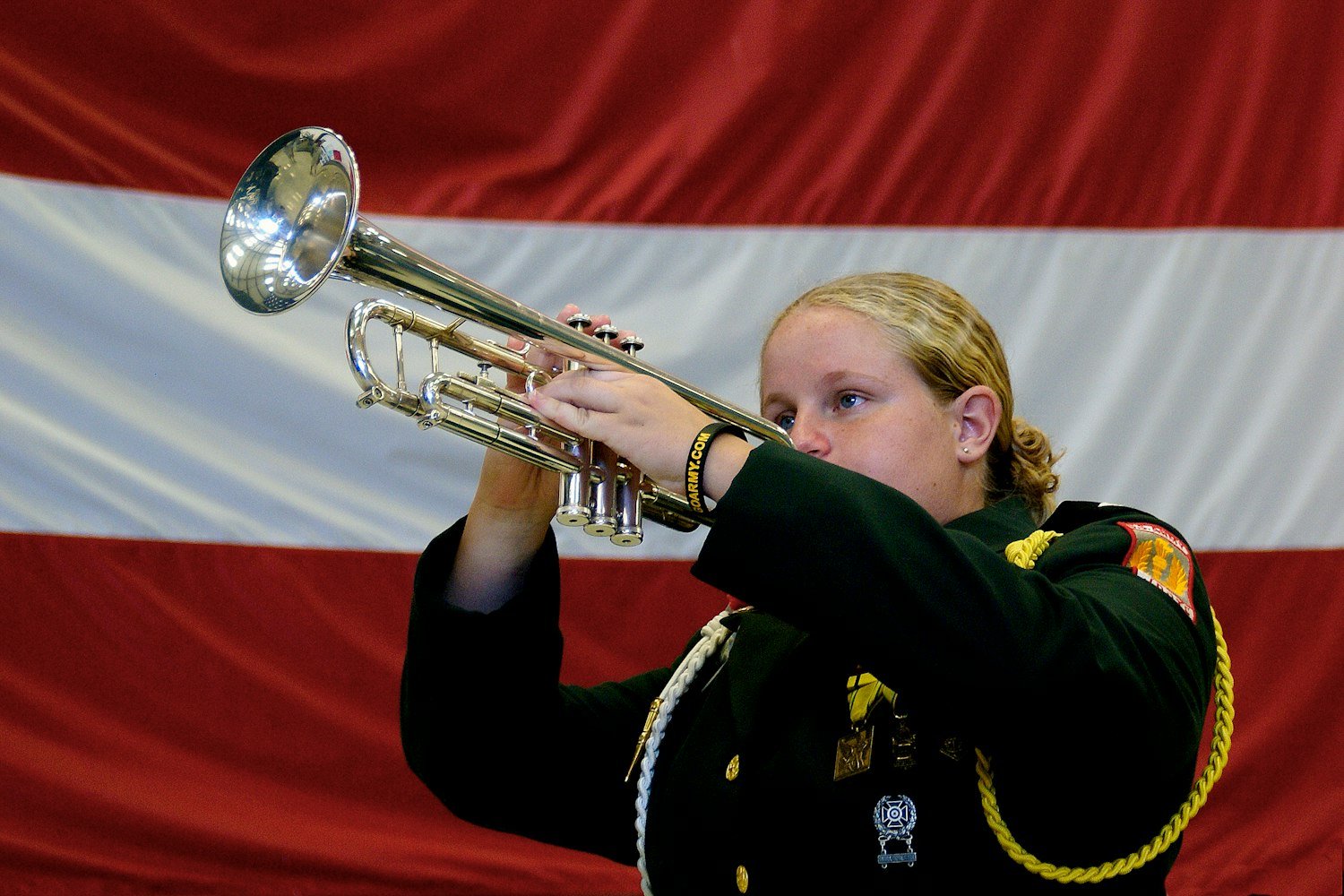
| Taps | Played on a bugle, typically 30–50 yards from the gravesite |
| Flag folding | The casket flag is folded 13 times into a tight triangle |
| Flag presentation | The folded flag is presented to the next of kin with a formal statement of gratitude |
The 13 Folds of the Flag
The flag isn’t folded arbitrarily. Each of the 13 folds is done with precision, ending in the familiar blue triangle with only stars visible — a deliberate echo of the 13 original colonies. It’s one of the most recognizable moments of any military funeral, and one of the few parts of the ceremony most attendees can actually see up close.

Post 51’s Honor Guard in Lebanon, Oregon
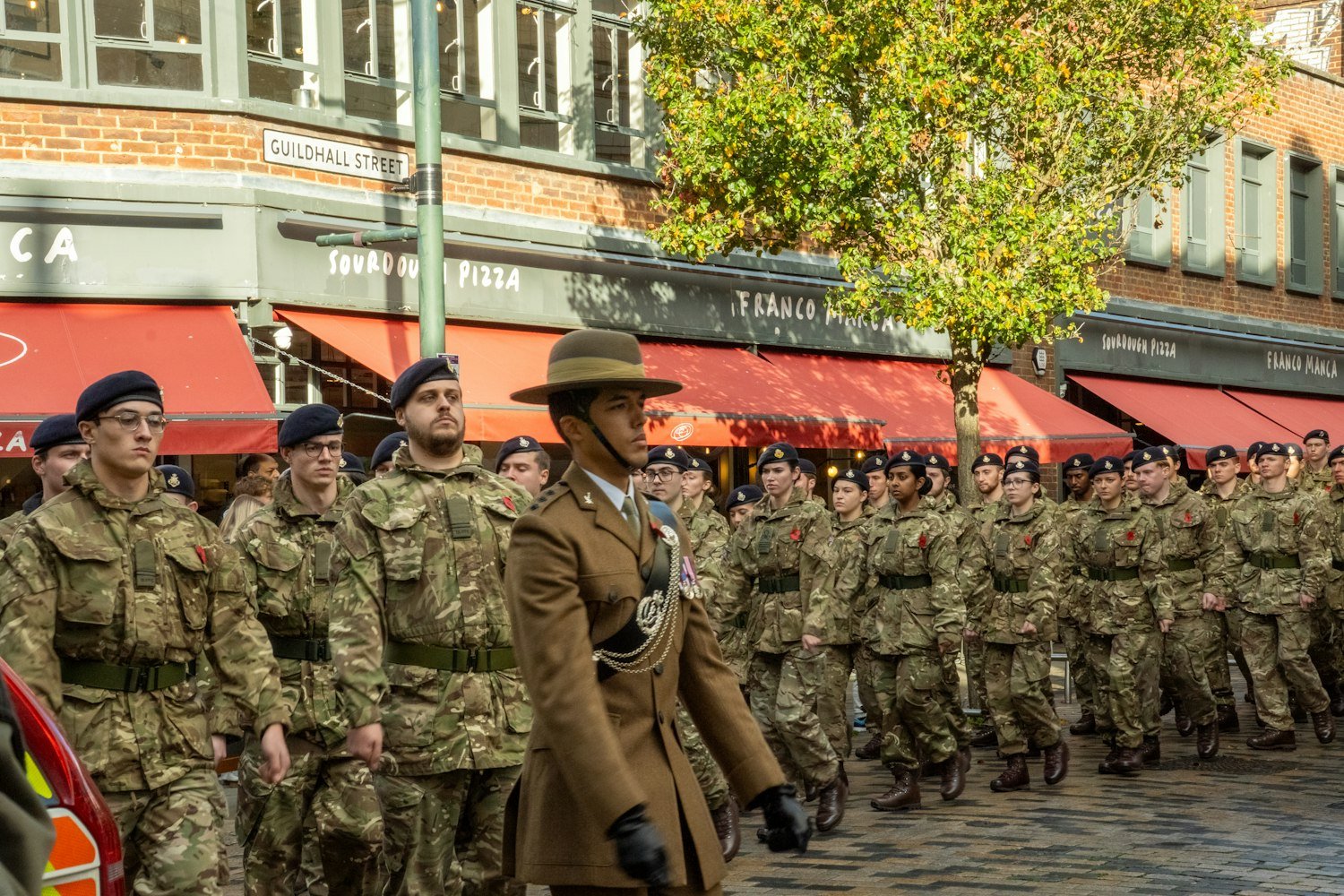
Post 51 maintains an active Honor Guard, made up of Post members who volunteer their time to serve veterans’ families across the Lebanon area. Beyond funeral services, the team is a visible part of community life — including marching in Lebanon’s Strawberry Parade, one of the town’s longest-running civic traditions.
That dual role — solemn duty at funerals, civic presence at parades — reflects the same pattern found across Post 51’s programs: remembrance and community involvement aren’t treated as separate missions.
Why “Three Volleys” Isn’t the Same as “21 Guns”
This is one of the most common mix-ups around military funerals, and it’s worth clearing up. A three-volley salute involves a detail of riflemen — traditionally seven, though smaller details are common — each firing three rounds in sequence. Three shots from seven rifles adds up to 21 total shots, which is where the confusion with the 21-gun salute comes from.
But a 21-gun salute is a separate, distinct honor, traditionally reserved for heads of state and the most senior military and civilian leaders, fired from actual cannons or artillery pieces — not rifles. What most funerals include is the three-volley rifle salute, not a 21-gun salute, even though the total round count happens to land on the same number.
How to Request Honor Guard Services
- Ask your funeral home first. Most funeral directors in the Lebanon area know to coordinate directly with local veterans organizations for funeral honors requests.
- Contact Post 51 directly. Call (541) 451-1351 to ask about Honor Guard availability for a veteran’s service.
- Have discharge paperwork ready if possible. A DD-214 helps confirm eligibility quickly, though funeral homes can often assist if it’s not immediately available.
- Ask early. Honor Guard details are volunteer-coordinated, so more notice makes scheduling easier.
Beyond Funerals: Where Else You’ll See the Honor Guard
Post 51’s Honor Guard shows up well beyond funeral services — at the Memorial Day observance at I.O.O.F. Cemetery, at local parades, and at Post ceremonies throughout the year. It’s the same team, and often the same members, carrying both duties.
Frequently Asked Questions
Is military funeral honors free?
Yes. Under federal law, eligible veterans are entitled to a funeral honors detail at no cost to the family.
Who is eligible for military funeral honors?
Generally, any veteran discharged under conditions other than dishonorable is eligible. Funeral homes and veterans organizations like Post 51 can help confirm eligibility.
What’s the difference between an Honor Guard and a Color Guard?
An Honor Guard renders full military funeral honors, including the rifle salute and flag folding. A Color Guard presents the flags at ceremonies and parades but doesn’t perform the funeral-specific elements.
Do I need to be a Legion member to request Honor Guard services?
No. Funeral honors requests are made through funeral homes or directly with Post 51 on behalf of the veteran’s family, regardless of Legion membership.
How many people are on a funeral honors detail?
Federal law requires at least two people, with at least two members of the armed forces (excluding retired status) when a full military detail is provided; veterans organizations like Post 51 often provide additional members for the complete ceremony.
Can the Honor Guard perform at a graveside service with no church service beforehand?
Yes. Funeral honors can be rendered at a graveside-only service, a church service, or a memorial service held separately from burial — the format depends on the family’s wishes, not a requirement of the honors themselves.
Honoring Those Who Served
Whether it’s a funeral, a parade, or the annual Memorial Day observance, Post 51’s Honor Guard represents one of the most visible ways the Post carries out its mission. To request Honor Guard services or learn more, contact Post 51 at (541) 451-1351.